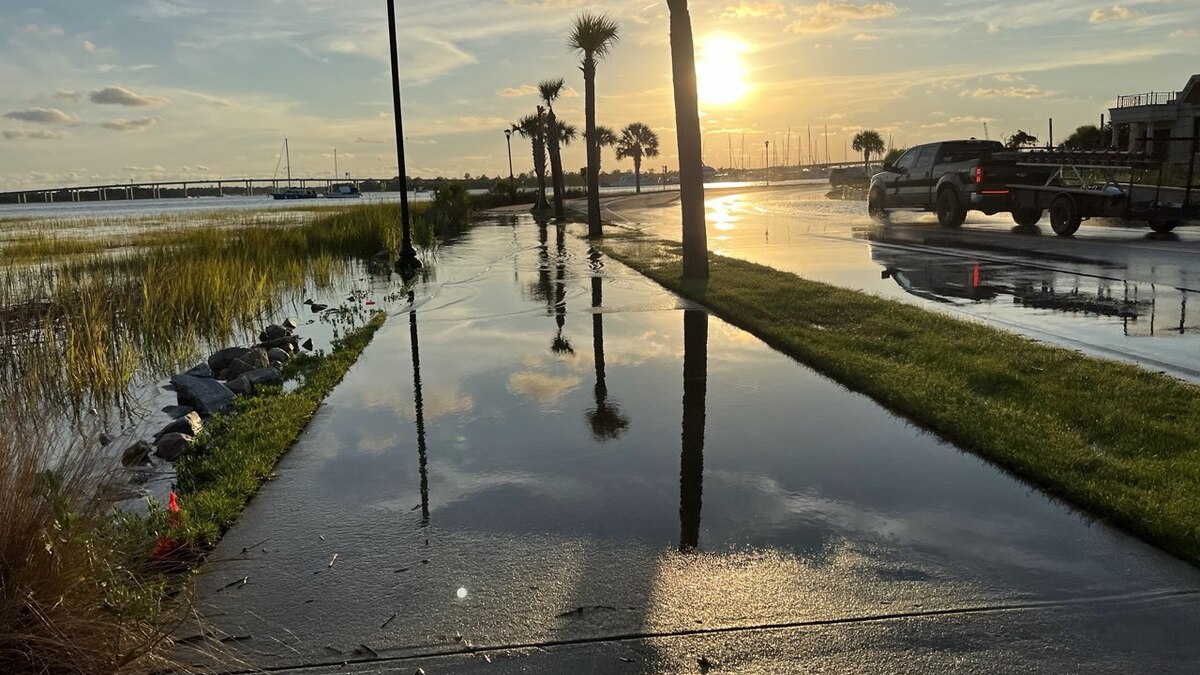
There's a specific kind of phone call local repair shops get after a Lowcountry storm.
A driver from North Charleston, Goose Creek, or Ladson calls and says something like this:
"My car made it through the water and it still runs — but now the brakes feel weird, something smells damp, and I'm not sure if I should keep driving it."
That question is exactly why this article matters.
After heavy rain in the Charleston area, many vehicles pass through standing water that looks harmless at first. The engine still starts. The car still moves. Nothing dramatic happens right away. So the driver assumes everything is probably fine.
Sometimes it is. But a lot of the time, the real problem starts after the drive home — when rust begins forming on brake hardware, moisture stays trapped in connectors, filters stay soaked, or wheel bearings start failing days later.
⚡ Quick Answer: Yes, Flood Water Can Damage Your Car Even If It Still Drives Normally.
If your vehicle went through standing water in Charleston, Ladson, Goose Creek, or nearby areas, it may need an inspection even if the engine never stalled. The most common hidden problems involve brakes, wheel bearings, filters, underbody components, and electrical connectors. The biggest mistake is waiting until corrosion or warning lights show up later.
📋 In This Article
- Why Flood Water Is More Dangerous Than It Looks
- What Usually Gets Damaged First
- Most Common Signs After Driving Through Water
- Can You Keep Driving?
- What To Do Right Away
- Why This Problem Is So Common in the Charleston Area
- What a Shop Should Inspect
- What Affects Repair Cost
- Frequently Asked Questions
Why Flood Water Is More Dangerous Than It Looks
Most drivers imagine flood damage as something obvious and catastrophic — a completely submerged car, a stalled engine, or water visibly pouring into the cabin. But that is only one end of the spectrum.
In reality, many flood-related repairs begin with partial water exposure, not total submersion.
That matters because standing water on Charleston roads is not just "water." It often contains:
- road grime and sediment
- oil residue and fuel runoff
- debris from shoulders and medians
- fine sand and grit
- moisture that stays trapped in underbody areas long after the road dries out
When that mixture hits hot brake components, exposed connectors, splash shields, bearings, and underbody seams, the vehicle may not fail immediately. Instead, it starts the kind of slow damage drivers notice later as brake noise, roughness, warning lights, odors, or electrical weirdness.
The biggest misunderstanding we see is this: drivers think no stall means no damage. But after Charleston flooding, a car can drive home just fine and still come back days later with brake issues, a wheel bearing noise, or corrosion starting in the electrical system.
— Ladson Auto Repair Shopis usually a bigger long-term problem than the initial splash. That is why early inspection matters after storm water exposure.
What Usually Gets Damaged First After Driving Through Standing Water
Not every system is affected equally. In most Charleston-area cases, these are the first places we worry about:
| System / Area | What Water Can Do | How Fast It Shows Up |
|---|---|---|
| Brakes | Wet friction surfaces, rust film, trapped grit, uneven braking | Immediately or same day |
| Wheel bearings / hubs | Moisture intrusion that later becomes humming or growling | Days to weeks |
| Cabin air filter / interior moisture | Damp smell, poor airflow, humidity retention | Same day or next day |
| Electrical connectors | Corrosion, intermittent faults, warning lights | Days later |
| Undercarriage / splash shields | Debris retention, loosened panels, moisture trapping | Immediate or delayed |
| Air intake / engine bay splash areas | Rough running, wet ignition components, misfire risk | Immediate if severe |
Notice what is missing here: it is not always the engine first. In fact, a lot of flood-related repair bills begin with brakes, bearings, filters, or electrical symptoms rather than full engine failure.
Most Common Signs After Driving Through Water
If your vehicle recently went through standing water in Charleston, Ladson, North Charleston, Hanahan, or Goose Creek, watch for these symptoms:
- brakes feel weak, noisy, or grab unevenly
- the steering feels slightly different afterward
- a humming or growling sound appears a few days later
- musty smell inside the vehicle
- the check engine light, ABS light, or traction control light comes on
- the engine hesitates, misfires, or idles rough
- power windows, locks, cameras, or sensors act irregularly
- you hear debris rubbing under the car or see a loose splash shield
⚠️ More Urgent Signs
Engine stall, severe brake change, loud grinding, immediate warning lights, rough running, or visible water intrusion under the hood.
Can You Keep Driving After Going Through Flood Water?
Sometimes, yes. But "it still drives" is not the same as "it is safe" or "nothing is wrong."
If the water was shallow, the engine never stalled, and the vehicle feels normal, some drivers may still be able to continue driving short-term. The problem is that this creates a false sense of security. The systems most often affected by flood water do not always fail in dramatic ways at first.
It may be unsafe to keep driving if:
- the engine stalled while in the water
- the brakes still feel weak after drying attempts
- the vehicle pulls while braking
- you hear grinding, dragging, or metal-on-metal noise
- warning lights came on immediately afterward
- the engine now runs rough or hesitates under load
What To Do Right Away After Driving Through Standing Water
- Do a quick visual check. Look for loose splash shields, hanging liners, trapped debris, or obvious puddles under the car.
- Test the brakes carefully. In a safe area, apply them gently. Wet brakes may need to dry, but they should not stay weak or uneven.
- Pay attention to warning lights. ABS, traction control, battery, and check engine lights all matter here.
- Notice new smells. Damp interior odor, hot metallic brake smell, or a burnt/electrical smell all deserve attention.
- Schedule an inspection if the water exposure was more than minor splash. That is especially true if you drove through water more than once during the same storm.
Why This Problem Is So Common in the Charleston and Ladson Area
This is not a generic national article topic. It is a very real local issue.
The Charleston metro area and Lowcountry region combine several conditions that make flood-related vehicle damage more common:
- heavy summer storm systems
- rapid road ponding in low areas
- commuters who still have to get home through flooded routes
- humidity that slows drying and encourages corrosion
- debris-heavy runoff during intense rainfall
For drivers in Ladson, Goose Creek, North Charleston, and Summerville, the issue is often not deep flood rescue conditions. It is the repeated exposure to standing water, road edge runoff, storm-drain overflow, and low-lying pooled intersections.
That repeated exposure is exactly what creates the "small now, expensive later" kind of damage that many people underestimate.
What we commonly see after Lowcountry flooding is not just one dramatic failure. It is a combination of things: noisy brakes, a wet cabin filter, a loose shield, and then a wheel bearing or electrical issue showing up later. That's why a full post-flood inspection is more useful than just checking whether the engine still starts.
— Ladson Auto Repair ShopWhat a Proper Flood Exposure Inspection Should Include
A quick glance under the hood is not enough. If a vehicle went through meaningful standing water, a proper inspection should look at multiple systems:
- brake feel, rust film, and hardware condition — a full brake repair and inspection covers rotors, pads, calipers, and hidden corrosion
- wheel bearings, hubs, and suspension points
- underbody shields, liners, and trapped debris
- air filter and intake path
- visible connectors and sensor areas
- stored diagnostic trouble codes — our check engine light diagnostics process reads all stored codes, not just active ones
- signs of retained cabin moisture or filter contamination
That process is especially important for Charleston-area drivers because the problem is often a combination of water + grit + humidity, not just water alone.
What Affects Repair Cost After Flood Exposure
There is no single flood-damage price because the repair can range from a basic inspection and minor cleanup to significant brake, bearing, or electrical work.
What usually affects cost most:
- how deep the water was
- how fast the vehicle entered it
- whether the engine stalled
- how long the vehicle remained in standing water
- which systems were exposed
- whether the issue is mechanical, electrical, or both
The biggest cost mistake is not the inspection fee. It is waiting until corrosion spreads, bearings fail, or a minor electrical problem becomes a much larger diagnostic job.
🚗 Need a Post-Flood Vehicle Inspection in Ladson?
If your car went through standing water in Charleston, Ladson, Goose Creek, North Charleston, or Summerville, bring it to Ladson Auto Repair Shop. We can inspect brakes, underbody components, filters, and electrical warning signs before hidden moisture and corrosion spread.
Written estimates. Local service. Real answers before a small problem turns into a larger repair bill.
📞 Call 843-494-9179 to ScheduleServing Ladson · Charleston · Goose Creek · North Charleston · Summerville · Hanahan
Frequently Asked Questions
These are some of the most common questions Charleston-area drivers ask after a flood or heavy storm:
What if my car still drives normally after flood water?
That is common. Flood-related damage is often delayed. Brakes, wheel bearings, electrical connectors, filters, and underbody parts can show symptoms later, not immediately after the drive.
How deep does water have to be to damage a car?
Even water below the door line can still affect brakes, wheel bearings, splash shields, wiring connectors, and underbody components. The risk depends on depth, speed, how long the vehicle was in water, and whether the engine stalled.
Can flood water ruin brakes?
Yes. Flood water can leave rust film, contamination, trapped debris, and uneven braking surfaces behind. Wet brakes may recover temporarily, but hidden corrosion and wear can continue afterward.
Should I get an inspection even if no warning lights came on?
Yes, if the water exposure was more than minor splash. Not every flood-related issue triggers a warning light right away. Many problems show up later as noise, brake feel changes, corrosion, or intermittent electrical faults.
What is the biggest danger after driving through standing water?
The biggest danger is assuming the vehicle is fine because it still starts and moves. Hidden damage often spreads afterward in brakes, bearings, filters, electrical connectors, and underbody parts.
If your vehicle went through standing water in Ladson, North Charleston, Goose Creek, or the Charleston area, schedule an inspection before corrosion or electrical issues spread.
You may also find these guides helpful: radiator repair signs , check engine light: solid vs. flashing , battery vs. alternator vs. starter , preparing your car for spring storms , and auto repair in Charleston, SC.
The Bottom Line: A Car That Survived the Water May Still Need Attention
The most important takeaway is simple: driving through standing water without an immediate breakdown does not prove your car is fine.
For Charleston-area drivers, the more common risk is delayed damage — brakes that start acting up later, a bearing that gets noisy days later, a soaked filter, a loose shield, or electrical corrosion that takes time to show itself.
If the water exposure was more than minor splash, especially after a Lowcountry storm, an inspection is often the cheapest way to avoid a bigger problem later.
This article was prepared by Ladson Auto Repair Shop, located at 3322 Ladson Rd, Ladson, SC 29456. We provide diagnostics, brake repair, electrical repair, cooling system service, and general auto repair for drivers in Ladson, North Charleston, Goose Creek, Summerville, Hanahan, and the greater Charleston area.