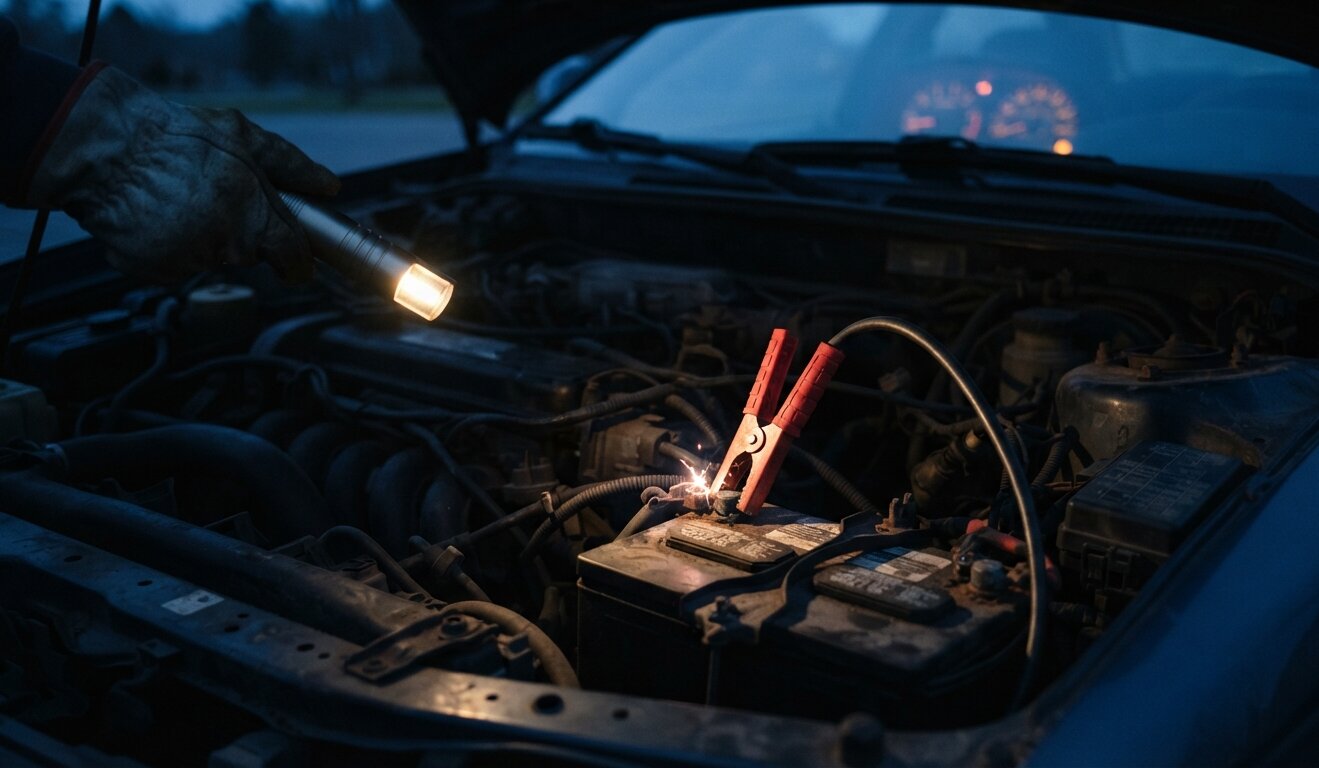
It's the ultimate morning nightmare: you've had your coffee, you're on your way out the door, and you turn the key—or push the start button—only to be met with a disheartening silence, a frantic clicking sound, or a sluggish groan that tells you one thing: your car won't start. In an instant, your carefully planned schedule is derailed, and the stress levels spike. Whether you are heading to work in downtown Ladson, running errands in North Charleston, or commuting from Summerville, a vehicle that refuses to ignite is more than an inconvenience; it's a crisis.
When this happens, most drivers feel a sense of helplessness. You know something is wrong with the electrical system, but the terminology can be confusing. Is it the free battery load test? Is it the alternator? Or has the starter finally given up the ghost? While these three components work together in a tight loop to get your engine running, they each play a very different role. Misdiagnosing the problem can lead to wasting money on a new battery when the real culprit was a failing alternator all along.
The good news is that your car actually gives you clues. By paying attention to the sounds your engine makes (or doesn't make) and observing how your lights and dashboard behave, you can often pinpoint the failure before you even pick up the phone. Our goal is to move you from a state of frustration to a state of understanding.
By the end of this guide, you will know exactly how to tell the difference between a dead battery, a failing alternator, and a broken starter motor. If the diagnosis proves too complex or you simply need a professional hand to get back on the road, the experts at Ladson Auto Repair Shop are here to help. You can reach us immediately at 843-494-9179 to get your vehicle diagnosed and repaired.
📋 In This Article
The Battery: The Power Source
To understand why your car won't start, you first have to understand the battery's role. Think of your car battery as a storage tank for electricity. Its primary job is to provide a massive burst of energy—called "cold cranking amps"—which is why a failing free battery load test is the #1 reason a car won't start. That energy flows to the starter motor, which then physically turns over the engine to begin the combustion process. Once the engine is running, the battery takes a backseat and begins to recharge.
A dead car battery is the most common reason for a no-start condition. When a battery fails, it simply doesn't have enough chemical energy left to push the starter motor. This results in a very specific set of symptoms. The most telltale sign is the "rapid-fire click." When you turn the key, you hear click-click-click-click in quick succession. This happens because there is enough power to engage the starter solenoid, but not enough to actually spin the motor, causing the solenoid to snap back and forth rapidly.
Other symptoms of a failing battery include dim headlights, a dashboard that flickers or goes completely dark when you try to start the car, and a "slow crank," where the engine sounds like it's struggling to turn over (rur... rur... rur...) before eventually giving up.
In South Carolina, batteries face a unique set of challenges. While many people associate battery failure with freezing winter temperatures, the intense Lowcountry heat is actually a far more aggressive killer. High temperatures cause the liquid electrolyte inside the battery to evaporate and accelerate internal corrosion. In the SC heat, a battery that might last five years in a cooler climate may only last two to three years. Other causes include "parasitic drain" (leaving an interior light on overnight), corroded terminals that prevent electricity from flowing, or simply reaching the end of its natural lifespan.
The Alternator: The Charger
If the battery is the storage tank, the alternator is the pump that keeps the tank full. The alternator is a generator that creates electricity while your engine is running. It powers the car's electrical systems (lights, radio, ECU) and sends a constant stream of current back into the battery to keep it charged.
When you have a failing alternator, the battery isn't necessarily "bad" at first—it's just not being recharged. You will notice bad alternator symptoms while you are actually driving, long before the car completely dies. One of the first signs is dimming headlights or a dashboard that seems to lose brightness as you slow down. You might also notice that your interior electronics act erratically, or you may see the battery warning light (the little red battery icon) illuminate on your instrument cluster. In some cases, a failing alternator bearing can produce a whining or grinding noise, or a slipping belt can create a distinct burning rubber smell.
The "Golden Test" for an alternator is the jump-start scenario. If your car won't start and you successfully jump-start it using another vehicle, pay close attention to what happens next. If the car runs fine for a few minutes but dies shortly after you remove the jumper cables, or if it refuses to restart after a short drive, your alternator is likely the culprit. A healthy alternator should be able to maintain the engine's electrical needs and recharge the battery simultaneously; if it can't, the car will drain the remaining battery power until the engine stalls.
The Starter: The Igniter
The starter motor is the bridge between electrical energy and mechanical motion. It is a powerful electric motor that engages a small gear (the pinion) with the large gear of the engine's flywheel. When the starter spins, it forces the engine to rotate, which allows the pistons to move and the spark plugs to fire, officially starting the car.
Unlike battery or alternator issues, starter motor failure usually happens abruptly. The most common symptom is a "single loud click." Unlike the rapid chatter of a dead battery, a bad starter often produces one solitary CLUNK when you turn the key, followed by absolute silence. This happens because the battery has plenty of power to push the solenoid forward, but the internal motor of the starter is seized or the electrical contacts have worn out, so the engine never actually turns.
Other signs of a failing starter include a grinding noise (which suggests the gear is not engaging properly with the flywheel) or, in extreme cases, smoke emanating from the starter area due to an electrical short. Some drivers experience "intermittent starting," where the car won't start for an hour, but then suddenly fires up perfectly on the next attempt. This is often caused by a "flat spot" on the starter motor's armature.
Quick Diagnosis Guide
When you're standing in your driveway and your car won't start, use this quick reference guide to narrow down the culprit.
| What do you hear/see? | Most Likely Culprit | Why? |
|---|---|---|
| Rapid clicking + dim lights | Battery | Not enough voltage to hold the starter solenoid closed. |
| One loud clunk + bright lights | Starter | Solenoid works, but the motor cannot spin the engine. |
| Slow cranking + dimming dash | Battery | Battery is weak but not completely dead. |
| Jump-starts fine, but dies shortly after | Alternator | The battery is charged, but the alternator isn't maintaining it. |
| Whining noise while driving | Alternator | Internal bearing failure or voltage regulator issue. |
| Grinding noise when turning key | Starter | Starter gear is slipping or damaged. |
What to Do Next
Once you have a general idea of why your car won't start, the most important rule is: Stop cranking the engine. Many frustrated drivers will continue to turn the key over and over, hoping that "one more try" will work. This is dangerous for two reasons. First, if the battery is weak, repeated cranking will drain the remaining voltage, making a jump-start more difficult. Second, if the starter is failing, excessive cranking can overheat the motor or damage the teeth on your engine's flywheel, turning a simple starter replacement into an expensive engine repair.
If you suspect a dead car battery, attempting a jump-start is a reasonable first step. Ensure you use high-quality jumper cables and follow the correct sequence. However, if the car requires a jump-start every single morning, you aren't "fixing" the problem—you are just masking a symptom. You likely need a battery replacement to ensure reliability.
Need a free battery test? Ladson Auto Repair Shop offers complimentary battery and charging system testing. Call 843-494-9179 — we'll pinpoint the exact cause and get you back on the road quickly.
Prevention Tips
- Clean Your Terminals: Over time, a white, ashy powder (corrosion) builds up on battery terminals. This corrosion acts as an insulator, blocking the flow of electricity. Every few months, check your terminals. If you see buildup, clean them with a mixture of baking soda and water and a wire brush.
- Regular Voltage Checks: Don't wait for the battery light to come on. During your regular oil change or tire rotation, ask your mechanic to perform a voltage test. A healthy battery should read about 12.6 volts when the engine is off and between 13.7 and 14.7 volts while the engine is running.
- Respect the Warning Lights: Your car's computer is designed to warn you before a total failure occurs. If your headlights seem slightly dimmer than usual or your power windows are moving slower, your charging system is struggling. Addressing a weak alternator now is significantly cheaper and less stressful than paying for a tow truck later.
🔋 Car Won't Start? Get Back on the Road Quickly
Don't let a dead battery or faulty alternator ruin your day. Bring your car to Ladson Auto Repair Shop for a free battery and charging system test. We'll pinpoint the exact cause of your starting issues and get you back on the road quickly and safely.
We service all makes and models. Same-day diagnostics available.
📞 Call Now: 843-494-9179Serving Ladson · Summerville · Goose Creek · North Charleston · Charleston · the entire Tri-County area
Frequently Asked Questions
Here are the most common questions we get from drivers dealing with no-start conditions:
Can a bad alternator ruin a battery?
Yes, absolutely. If the alternator fails, the car will pull all its electrical power from the battery. Because the battery isn't being recharged, it will eventually be drained to a point where it can no longer hold a charge. In many cases, a completely dead battery is actually a symptom of a failed alternator.
How long should a car battery last in South Carolina?
Generally, you can expect a battery to last 3 to 5 years. However, due to the extreme heat and humidity in the Lowcountry, many batteries fail closer to the 3-year mark. We recommend having your battery tested every autumn and spring.
Is it safe to drive with a bad starter?
You cannot drive with a "bad" starter because the starter is only used to begin the process of running the engine. Once the car is started, the starter is no longer engaged. However, if your starter is failing intermittently, you run the risk of being stranded.
Why does my car start sometimes but not others?
This is often a sign of a failing starter motor (a "flat spot" on the armature) or loose/corroded battery terminals. If the connection is loose, a bump in the road or a change in temperature can break the electrical circuit.
How much does it cost to replace a starter?
Costs vary depending on the make and model of your vehicle and whether you use an OEM or aftermarket part. Because some starters are located in hard-to-reach areas of the engine bay, labor costs can vary. The best way to get an accurate price is to have a professional diagnostic performed.
The Bottom Line: Don't Guess — Test
Let's recap the key takeaways:
- Rapid clicking = Battery — usually needs replacement or jump-start.
- Single clunk = Starter — starter motor has failed and needs replacement.
- Jump-starts but dies = Alternator — not charging the battery while driving.
- South Carolina heat kills batteries faster — expect 2-3 years lifespan, not 4-5.
- Free testing available — Ladson Auto Repair Shop offers complimentary battery and charging system tests.
- Don't keep cranking — repeated attempts can cause additional damage.
At Ladson Auto Repair Shop, we understand that a car that won't start is one of the most frustrating problems you can face. You don't know what's wrong. You don't know what it'll cost. You're wondering if you'll make it to that important meeting or pick up your kids on time.
That's why we start every visit with a thorough diagnostic — not guesswork — and give you a clear, honest estimate before any wrench touches your car. We'll tell you exactly what's wrong, what it costs to fix, and how quickly we can get you back on the road. Then you decide.
We're located at 3322 Ladson Road, right in the heart of Ladson, SC. We service drivers from Summerville, Goose Creek, North Charleston, and the entire Tri-County area. If your car won't start — or you just want peace of mind about your battery's condition — give us a call at 843-494-9179. We're here to help.
This article was written by the automotive service experts at Ladson Auto Repair Shop, located at 3322 Ladson Rd, Ladson, SC 29456. We specialize in complete auto repair including battery testing and replacement, alternator repair, starter replacement, electrical diagnostics, brake repair, AC service, oil changes, and preventive maintenance for all makes and models. Proudly serving Ladson, Summerville, Goose Creek, North Charleston, and the greater Charleston, SC metro area.