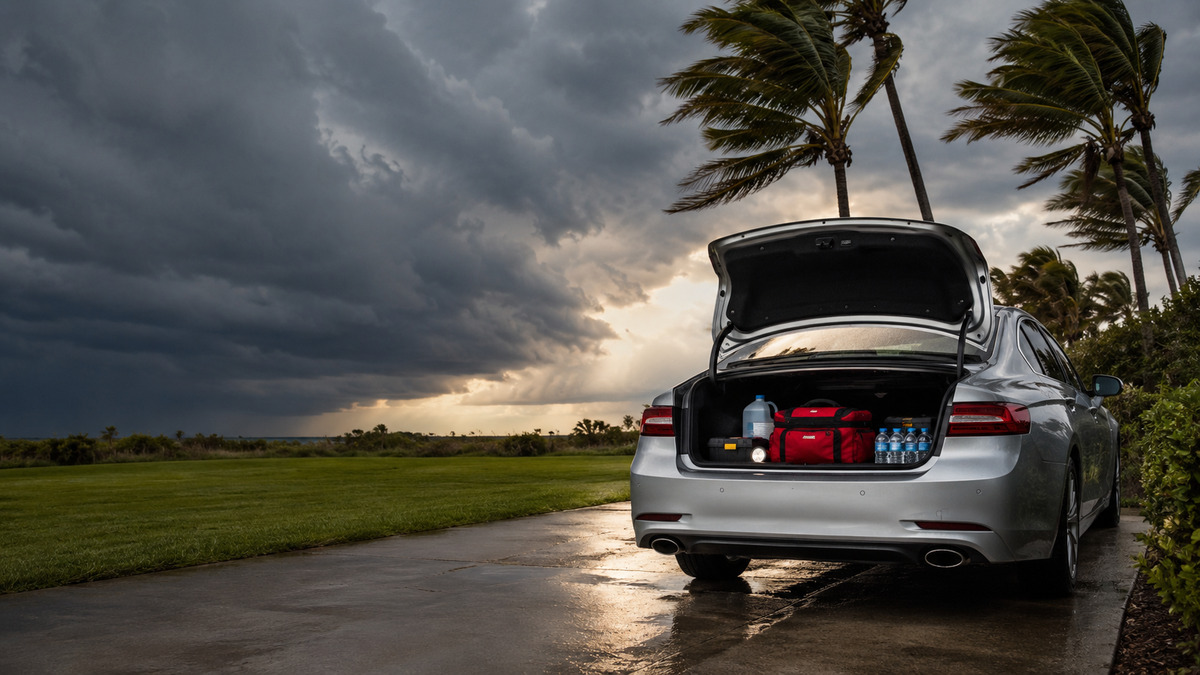
Atlantic hurricane season runs June 1 through November 30. If a storm turns toward the Lowcountry, your car becomes the most important piece of equipment you own. Here's how to make sure it's ready before you need it.
When an evacuation order comes for the Charleston area, everyone leaves at the same time, on the same roads. If you've lived here through a lane reversal on I-26, you know what that looks like: bumper-to-bumper traffic from North Charleston past Summerville, in August heat, for hours. That is the single worst environment imaginable for a car with a weak battery, a marginal cooling system, or tires that should have been replaced last spring.
The cars that break down during evacuations are almost never surprises. They're cars with known issues that the owner planned to "get to eventually." Hurricane season is the deadline for eventually. Everything on this checklist can be handled in a single visit, and most of it you can check yourself in your driveway this weekend.
From June through November, never let your gas tank drop below half. When a storm enters the forecast cone, gas stations in Ladson, Summerville, and Goose Creek run dry within a day — often before an evacuation is even ordered. Half a tank gets you out of the evacuation zone even in stop-and-go traffic. A quarter tank might not.
📋 In This Article
- Why Evacuation Traffic Is So Hard on Cars
- The Cooling System: Your #1 Priority
- Battery: The Silent Evacuation Killer
- Tires: Heat, Load, and Standing Water
- Wipers and Visibility
- Brakes and Fluids
- The Pre-Season Checklist (Do This in May)
- The 72-Hour Checklist (Storm in the Forecast)
- Where to Park If You're Staying
- Repair Cost Table
- FAQ
Why Evacuation Traffic Is So Hard on Cars
Evacuation traffic combines every stress your car hates, all at once:
Extended idling and crawling in extreme heat. At 5 mph on I-26 in 95-degree August heat, there's almost no airflow through the radiator. Your electric cooling fans are doing all the work, your AC condenser is dumping extra heat into the same cramped space, and the engine has no chance to breathe. A cooling system at 80% health fails under these conditions — and an overheated car on the shoulder during a lane reversal may sit there through the storm.
Heavy loads. An evacuating car carries the whole family, pets, luggage, water, and sometimes a trailer. Extra weight raises tire temperatures, works the brakes harder, and strains a marginal transmission.
Nowhere to stop. During a lane reversal, exits are limited and services along the route are overwhelmed or closed. The usual safety net — pull off at the next exit, call a tow — mostly doesn't exist. Whatever condition your car is in when you leave the driveway is the condition you're committed to.
That's why hurricane prep isn't a special service — it's ordinary maintenance done before the deadline instead of after.
The Cooling System: Your #1 Priority
Overheating is the most common evacuation breakdown, and it's almost always preventable.
What to check yourself:
- Coolant level, engine cold, in the overflow reservoir. Below the MIN line means the system is losing coolant somewhere — that's a leak to find, not just a top-off.
- Coolant color. It should look clean and bright (green, orange, pink, or blue depending on type). Rusty, brown, or oily coolant means the system needs a flush before it fails.
- Puddles. A sweet-smelling green, orange, or pink puddle under the car after parking is a coolant leak. See our fluid leak color guide to identify it.
- Temperature behavior. If your gauge creeps up at long red lights but recovers on the highway, your radiator fans or radiator condition are marginal. That's exactly the failure mode evacuation traffic exposes.
What we check in the shop: radiator condition and flow, hoses (they fail from the inside — a hose can look fine and be one heat cycle from bursting), water pump weep hole, thermostat operation, fan operation at temperature, and system pressure test for slow leaks. This is all part of our radiator and cooling system service, and the article on what to do when your car overheats covers the emergency version — but the goal is to never need it.
How serious: Highest priority on this list. An engine that overheats badly enough, for long enough, is a destroyed engine — head gasket at minimum. Cost of prevention: often just a coolant flush ($100–$180). Cost of failure: $1,500 to a replacement engine.
Battery: The Silent Evacuation Killer
South Carolina heat kills batteries faster than northern cold does — we covered why in our SC battery article. What matters for hurricane season:
Heat damage is cumulative and invisible. A battery weakened by two Lowcountry summers may still start the car every morning — until you load it up during an evacuation: AC on max, phone chargers running, headlights on in the rain, stop-and-go driving that never lets the alternator fully recharge it. Then it dies at a gas station in Orangeburg with a hundred cars in line behind you.
The fix is a five-minute test. A load test tells you the battery's actual remaining capacity, not just whether it starts the car today. We test batteries free with any service. If yours is more than 3 years old and has never been tested, do it in May, every year.
Also check: terminal corrosion (the white-green crust — it causes charging problems and hard starts) and the alternator's charging output, since a failing alternator kills even a new battery.
Cost: Battery test: free with service. Replacement if needed: $180–$320 installed, depending on the vehicle. Terminal cleaning: usually included. Our battery and charging system service covers testing, replacement, and alternator diagnostics.
Tires: Heat, Load, and Standing Water
Evacuation driving means a heavily loaded car, high pavement temperatures, and — before and after the storm — standing water. Tires handle all three, or they don't.
Tread depth is your hydroplaning defense. The difference between 8/32" of tread and 3/32" is the difference between tracking through standing water on Highway 78 and floating over it. Quick check: insert a quarter upside down into the tread groove. If you can see the top of Washington's head, you're at or below 4/32" — replace before hurricane season, not after.
Check pressure with the load in mind. Underinflated tires flex more, run hotter, and fail at highway speed — heat-related blowouts spike in Lowcountry summers. Check pressure monthly (when tires are cold), and check again before loading the car for an evacuation. Your correct pressure is on the driver's door jamb sticker, not the tire sidewall.
Inspect the sidewalls. Bulges or bubbles mean internal belt damage — a tire that can fail catastrophically under load. Run your hand around each sidewall; it takes two minutes.
Don't forget the spare. An evacuation is the worst possible time to discover the spare is flat or the jack is missing. Check it in May.
Rotation and tire replacement are best handled by a dedicated tire specialist — we'll gladly refer you to one. In the meantime, our wheel alignment and suspension service fixes the things that cause tires to wear unevenly.
Wipers and Visibility
The most-ignored item on this list, and one of the cheapest. Lowcountry sun bakes wiper rubber into uselessness in about a year — and hurricanes deliver rain that overwhelms even good wipers.
- Replace blades every 12 months, ideally each May before season starts. If they streak, chatter, or leave haze now, they will be useless in tropical rain.
- Top off washer fluid — salt spray, road film, and pollen residue smear badly when the first rain hits.
- Test your headlights, brake lights, and hazards. Evacuation traffic in heavy rain is exactly when a dead brake light gets you rear-ended.
- Check the AC. Not for comfort — for defogging. A weak AC system can't dehumidify the cabin, and fogged-up glass in tropical rain is a genuine safety problem. If your AC is blowing warm, here's what's going on.
Cost: Wiper blades: $30–$60 installed. Bulbs: $15–$50 typical.
Brakes and Fluids
Stop-and-go evacuation traffic is thousands of brake applications in a single day, with a loaded car.
- If your brakes squeal, grind, or pulse now, fix them before season. Worn pads that are "fine for around town" overheat and fade in sustained stop-and-go with a full load. Our guide to brake warning signs covers what to listen for. Our brake repair and inspection service covers pads, rotors, and fluid.
- Brake fluid absorbs moisture — a real issue in Lowcountry humidity. Moisture-saturated fluid boils under hard, repeated braking, and the pedal goes soft exactly when you need it. If your fluid has never been flushed and the car is 4+ years old, have it tested.
- Check the oil. If you're within 500 miles of your oil change interval in June, just do it. Extended idling in extreme heat is severe service, and it's exactly what old, thin, depleted oil handles worst.
- Transmission fluid matters for the same reason — crawling traffic in heat is the hardest thing an automatic transmission does. If yours already shows signs of a leak or slipping, evacuation traffic will find it.
The Pre-Season Checklist (Do This in May)
Print this. One shop visit plus one driveway hour covers all of it.
At the shop (one visit):
- Cooling system inspection + pressure test (flush if due)
- Battery load test + charging system check
- Brake inspection (pads, rotors, fluid condition)
- Tire tread, condition, rotation if due
- Oil change if within 1,000 miles of due
- Belts and hoses inspection
- AC performance check
In your driveway:
- Wiper blades replaced, washer fluid full
- All lights working, including hazards
- Spare tire inflated, jack and lug wrench present
- Tire pressures set to door-jamb spec
- Registration and insurance card in the glovebox (photograph both to your phone)
- Phone charger that lives in the car permanently
Our multi-point inspection covers the shop-side list in a single appointment.
The 72-Hour Checklist (Storm in the Forecast)
When a storm enters the forecast cone for the SC coast:
- Fill the tank completely. Do it the day the cone appears, not the day the evacuation is ordered.
- Recheck tire pressures — including the spare.
- Charge everything, and put a backup battery pack in the car.
- Load water and snacks — evacuation traffic can turn a 2-hour drive to Columbia into 8.
- Photograph your car inside and out, with the odometer. If it's damaged in the storm, you'll want dated "before" photos for insurance.
- Know your evacuation zone and route. For most of the Ladson/Summerville area, the primary route is I-26 west toward Columbia; during a mandatory evacuation, SCDOT may reverse the eastbound lanes. Check scemd.org for your zone.
- Do NOT plan on fixing anything in these 72 hours. Shops fill up, parts deliveries stop, and everyone is closing to prepare their own families. Prevention season ended in May.
Where to Park If You're Staying
If you're riding out a smaller storm at home, where the car sits matters as much as its condition:
- Not under trees. Falling limbs total more Lowcountry cars per storm than flooding does in most events.
- Highest ground available. Even a foot of elevation matters. If your street floods in ordinary summer thunderstorms — plenty do around Ladson and Summerville — it will flood worse in a tropical system. A parking garage's upper level is a legitimate option.
- Not against the garage door. Garage doors are a common wind failure point; a car parked tight against one gets crushed when the door fails inward.
And if the worst happens and your car does go through water — don't start it. Read our guide on what to check after flood exposure first. Starting a flooded engine can turn a repairable car into a total loss.
Repair Cost Table
| Item | Typical Cost | When |
|---|---|---|
| Coolant flush | $100 – $180 | Every 2–5 yrs / if dirty |
| Cooling system pressure test | $40 – $90 | Pre-season if any symptoms |
| Battery load test | Free with service | Every May |
| Battery replacement | $180 – $320 | If test fails / 4+ yrs old |
| Wiper blades (pair, installed) | $30 – $60 | Every 12 months |
| Brake fluid flush | $90 – $150 | Every 2–3 yrs |
| Tire replacement | $120 – $280/tire | At 4/32" or damage |
| Oil change | $50 – $110 | If due before June |
| Pre-season multi-point inspection | Ask — often bundled | Every May |
Frequently Asked Questions
When exactly should I do all this?
Is it really necessary every year?
My car is only three years old. Do I still need this?
Should I evacuate in a car with a known problem, or leave it?
Does insurance cover hurricane damage to my car?
Get Storm-Ready in One Visit
Cooling system, battery, brakes, tires — checked and handled before the season peaks. Loaner cars available if repairs take longer.
Or book online: Book Appointment Online
Ladson Auto Repair Shop — 3322 Ladson Rd, Ladson, SC 29456. Serving Ladson, Summerville, Goose Creek, North Charleston, and the greater Charleston, SC metro area.
Need Help? Call Ladson Auto Repair Shop
If you have questions about your vehicle or need to schedule a repair, our experienced mechanics are here to help. We provide honest diagnostics, fair pricing, and a 12-month/12,000-mile warranty on all repairs.
📞 Call Now: 843-494-9179Serving Ladson, Summerville, North Charleston, Goose Creek, and Hanahan, SC.