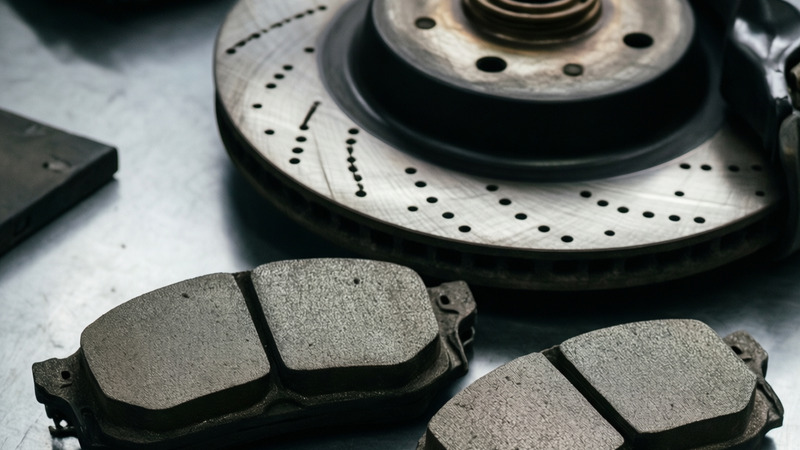
When you get behind the wheel of your car to navigate the busy streets of the Lowcountry, there are a dozen systems working in harmony to keep you moving. However, there is only one system that is absolutely critical for your survival and the safety of everyone else on the road: your brakes. Whether you are commuting from Ladson to North Charleston or running errands around the neighborhood, your braking system is the only thing standing between a controlled stop and a potentially devastating accident. Because they are tucked away behind your wheels, it is easy to ignore your brakes until something goes wrong, but waiting for a total failure is a risk no driver should take.
Driving in South Carolina presents unique challenges for your vehicle's braking system. The intense summer heat and oppressive humidity of the coastal plains can cause brake fluid to degrade faster than in cooler climates. Furthermore, the stop-and-go traffic common on Ladson Road and the surrounding corridors puts constant stress on your brake pads, leading to accelerated wear and tear. If you have been wondering whether it is time for brake repair in Ladson, the best approach is to listen to your car. Your vehicle will almost always give you warning signs long before the brakes fail completely.
At Ladson Auto Repair Shop, we believe that an informed driver is a safe driver. Recognizing the early warning signs of brake wear can save you from expensive rotor replacements and, more importantly, keep your family safe. If you suspect your vehicle isn't stopping as quickly as it used to, or if you've noticed strange sounds coming from your wheels, don't guess with your safety. You can reach our expert technicians immediately at 843-494-9179 to discuss your concerns or schedule a professional evaluation.
In this comprehensive guide, we will walk you through the five most common signs that your brakes are failing, explain how the South Carolina climate affects your stopping power, and detail exactly what happens during a professional inspection. By the time you finish reading, you'll know exactly when to seek a brake inspection near me and how to extend the life of your braking system.
Sign 1: Squealing or Squeaking Noises
One of the most common and recognizable signs that you need brake repair in Ladson, SC, is a high-pitched squealing or squeaking sound that occurs when you apply pressure to the brake pedal. For many drivers, this noise is simply an annoyance—something to be tuned out with the radio. However, in the world of automotive engineering, that squeal is actually a carefully designed alarm system.
Most modern brake pads are equipped with a small metal tab known as a "wear indicator." As the friction material on the brake pad wears down over time, this metal tab eventually makes contact with the rotating brake rotor. This contact creates a specific, high-frequency vibration that manifests as a squeal. Essentially, the brake pad is "screaming" at you to let you know that the friction material has reached a critically low level and that a brake pad replacement is necessary.
It is important to distinguish between "nuisance" squeaks and "warning" squeaks. Occasionally, brakes may squeak due to moisture or a bit of surface rust after a humid South Carolina night; these usually disappear after a few stops. However, if the squealing is consistent and happens every time you slow down, it is a clear signal that your pads are thin. While it isn't an immediate emergency in the sense that your brakes will stop working in the next five minutes, it is a ticking clock. Ignoring this sign leads directly to the much more dangerous "grinding" phase, where the cost of repair increases significantly.
Sign 2: Grinding or Growling Sounds
If you ignored the squealing phase, the next stage of brake wear is far more serious: grinding. If you hear a harsh, metallic scraping or growling sound when you brake, you are no longer dealing with a wear indicator; you are dealing with metal-on-metal contact. This happens when the friction material on the brake pad has been completely worn away, leaving only the steel backing plate to press against the iron brake rotor.
This is a genuine automotive emergency. When steel rubs against steel, the friction is no longer controlled. Not only does this significantly increase your stopping distance, but it also causes rapid destruction of the brake rotors. Rotors are the heavy discs that your pads grip to stop the car; once they are "scored" or gouged by the metal backing plate, they often cannot be resurfaced and must be replaced entirely. What would have been a simple, affordable pad replacement now becomes a much more expensive overhaul of the entire braking assembly.
Beyond the financial cost, grinding brakes are unpredictable. The extreme heat generated by metal-on-metal friction can lead to "brake fade," where the brakes lose their effectiveness during a long stop or in heavy traffic. If you hear grinding, we strongly recommend that you seek brake repair near me immediately. Avoid any unnecessary driving and call us at 843-494-9179 so we can get your vehicle into the shop before a total failure occurs.
Sign 3: Soft or Spongy Brake Pedal
Not all brake warnings are audible; some are felt through your foot. A healthy brake pedal should feel firm. When you press down, there should be a predictable amount of resistance before the car begins to decelerate. If you notice that your pedal feels "soft," "spongy," or if it sinks slowly toward the floorboard while you are holding it at a stoplight, you have a serious hydraulic issue.
The braking system relies on an incompressible fluid to transfer the force from your foot to the brake calipers. If that system is compromised, the pedal will feel spongy. There are three primary culprits for this sensation:
- Air in the Brake Lines: Air is compressible, unlike fluid. If air bubbles enter the lines, your foot is simply compressing air instead of moving the brake pads.
- Brake Fluid Leaks: If there is a leak in a brake line, hose, or the master cylinder, there isn't enough pressure to stop the car effectively. This is often accompanied by a puddle of clear-to-amber fluid under the car.
- Worn Master Cylinder: The master cylinder is the heart of the system. If the internal seals fail, fluid bypasses the piston, causing the pedal to sink.
A spongy pedal is incredibly dangerous because it often precedes a complete loss of braking power. If you feel your pedal dipping, you should immediately seek brake system diagnostics to identify the source of the pressure loss. This is not a problem that "settles in" over time; it is a systemic failure that requires professional intervention.
Sign 4: Car Pulls to One Side When Braking
In a perfect world, when you hit the brakes, your car should move in a straight line. If you find that your vehicle veers or "pulls" to the left or right specifically when you apply the brakes, you are experiencing uneven braking force. This means one side of your vehicle is stopping more effectively than the other, which can cause you to lose control during an emergency stop.
There are several reasons why a car might pull during braking. One common cause is a "stuck" or frozen brake caliper. The caliper is the clamp that pushes the pads against the rotor. If the caliper piston becomes seized due to corrosion—a common issue in the humid SC climate—it may not apply equal pressure, or it may stay partially engaged, causing the car to pull.
Other causes include uneven pad wear or a collapsed brake hose that acts like a one-way valve, restricting fluid flow to one wheel. This imbalance doesn't just affect your steering; it puts immense strain on your suspension and tires. If your car is pulling, it is time for a professional evaluation to ensure that all four corners of your vehicle are working in unison.
Sign 5: Brake Warning Light Is On
Your dashboard is designed to communicate with you, and the brake warning light is one of the most critical indicators on the panel. However, many drivers are confused because there are often two different lights: the general brake warning light (usually a red exclamation point or the word "BRAKE") and the ABS (Anti-lock Braking System) light.
The brake warning light typically indicates a problem with the hydraulic system or the parking brake. Most commonly, it triggers when the brake fluid level in the reservoir drops below a certain point. While this could simply mean you are low on fluid, it often means your pads are so worn that the calipers have extended fully, drawing more fluid out of the reservoir. It can also signal a critical leak.
The ABS light, on the other hand, indicates a fault in the electronic system that prevents your wheels from locking up during a hard stop. While your car will still stop if the ABS light is on, you lose the ability to steer while braking hard, which is a vital safety feature in rainy South Carolina weather. Understanding how rain affects brake performance — and what to check before storm season hits — can make the difference between a controlled stop and a dangerous skid.
If either of these lights illuminates, you should treat it as a priority. For more information on how to interpret various warning lights on your dashboard, feel free to explore our blog. Regardless of which light is on, the solution is the same: get a professional inspection immediately.
How Long Do Brake Pads Last in South Carolina?
A common question we hear at the shop is, "How long do brake pads last?" In general, most brake pads are designed to last between 30,000 and 70,000 miles. However, these numbers are mere averages. Your actual mileage will vary wildly based on your driving habits and the environment.
In Ladson and the surrounding Lowcountry, several factors tend to shorten the lifespan of brake pads:
- Extreme Heat: High temperatures can cause brake fluid to oxidize and pads to glaze over, reducing their effectiveness and increasing wear.
- Humidity and Salt: The moisture in the air, combined with road salt used during the occasional winter freeze, accelerates corrosion on calipers and rotors.
- Stop-and-Go Traffic: If your daily commute involves heavy traffic on I-26 or Hwy 17, you are applying your brakes hundreds of times more than someone driving on an open highway. Every time you stop, you are shaving a tiny layer of friction material off your pads.
- Driving Style: "Hard" braking—slamming on the brakes at the last second—generates immense heat and wears pads down significantly faster than gradual deceleration.
Because of these variables, we don't recommend relying solely on mileage. Instead, we suggest having your brakes checked during every oil change. A quick visual inspection can tell us exactly how much "meat" is left on your pads, allowing us to plan for a replacement before it becomes an emergency.
What Happens During a Brake Inspection?
Many drivers are hesitant to book a brake inspection near me because they fear they will be told they need expensive repairs they don't actually need. At Ladson Auto Repair Shop, we provide a transparent, step-by-step process so you know exactly what is happening with your vehicle.
During a comprehensive brake inspection, our technicians perform the following:
- Visual Pad Measurement: We remove the wheels to physically measure the thickness of the brake pads using a depth gauge. We don't guess; we give you the exact millimeter measurement.
- Rotor Condition Assessment: We inspect the rotors for "scoring" (deep grooves), warping (which causes steering wheel shake), or excessive rust.
- Brake Fluid Analysis: We check the fluid level and its condition. If the fluid is dark or contaminated with moisture, we recommend a flush to protect your master cylinder.
- Caliper and Hose Inspection: We check for leaking brake lines and ensure that the calipers are sliding freely and not seized.
- Test Drive: We take the vehicle for a short drive to listen for noises and feel for any pulling or pulsations in the pedal.
By the end of this process, you receive a clear report. If your pads have plenty of life, we'll tell you. If they are getting low, we'll give you an estimate for our brake repair service so you can budget for it on your own terms.
Need a brake inspection? Ladson Auto Repair Shop is here for you. Call 843-494-9179 — we'll get your vehicle inspected and ensure your brakes are safe for Lowcountry roads.
FAQs About Brake Repair in Ladson, SC
Here are the most common questions we get from drivers dealing with brake issues:
How much does brake pad replacement cost in Ladson, SC?
The cost varies depending on your vehicle's make and model, as well as whether you need just the pads or both pads and rotors. Generally, a standard pad replacement is an affordable maintenance item. We provide free, transparent quotes so there are no surprises when you pick up your car.
Can I drive with squeaky brakes?
You can drive with them for a short period, but you should not ignore them. The squeak is a warning. If you continue to drive, you will eventually move from the "squeaking" phase to the "grinding" phase, which will destroy your rotors and significantly increase your repair bill.
How often should I get my brakes inspected?
We recommend a visual brake check every 6 months or every 6,000 miles (typically coinciding with your oil change). This allows us to catch wear early and ensures your fluid is topped off and clean.
What's the difference between brake pads and rotors?
Think of the rotor as a spinning metal disc attached to your wheel. The brake pads are the friction material that clamps down on that disc to stop it from spinning. The pads are designed to wear down over time, while the rotors are designed to last much longer.
Do you offer brake service warranties?
Yes. We stand behind our work. Every brake service we perform comes with a warranty on both parts and labor, giving you peace of mind that your vehicle is safe and your investment is protected.
Where can I get brake repair near me in Ladson?
Ladson Auto Repair Shop at 3322 Ladson Rd, Ladson, SC 29456 performs brake inspections, pad and rotor replacement, and complete brake service. Call 843-494-9179 or book online — we give you a written quote before any work begins.
Will you tell me if I don't actually need brake repair?
Yes. Many of our brake inspections end with no repairs needed. We measure your pads to the millimeter and show you the readings, and we only recommend service when the measurements say it is needed.
Don't Gamble With Your Safety
Your brakes are the most critical safety feature of your vehicle. While it might be tempting to ignore a small squeak or a slightly soft pedal, the risks are simply too high. Whether you are dealing with grinding noises, a dashboard warning light, or you just know it's been a long time since your last check-up, the team at Ladson Auto Repair Shop is here to help.
If you notice any of the signs mentioned in this guide, don't wait for a failure to happen. Call us today at 843-494-9179 or book your appointment online.
We proudly provide expert brake repair in Ladson, SC, and serve our neighbors in Summerville, North Charleston, Goose Creek, and Hanahan. Let us ensure that your vehicle stops safely every single time.
🛑 Schedule Your Brake Service Now
Don't wait until it's too late. Get your brakes inspected by our experts today.
We proudly serve Ladson, Summerville, North Charleston, Goose Creek, and Hanahan.
Book Online NowServing Ladson · Summerville · Goose Creek · North Charleston · Charleston · the entire Tri-County area