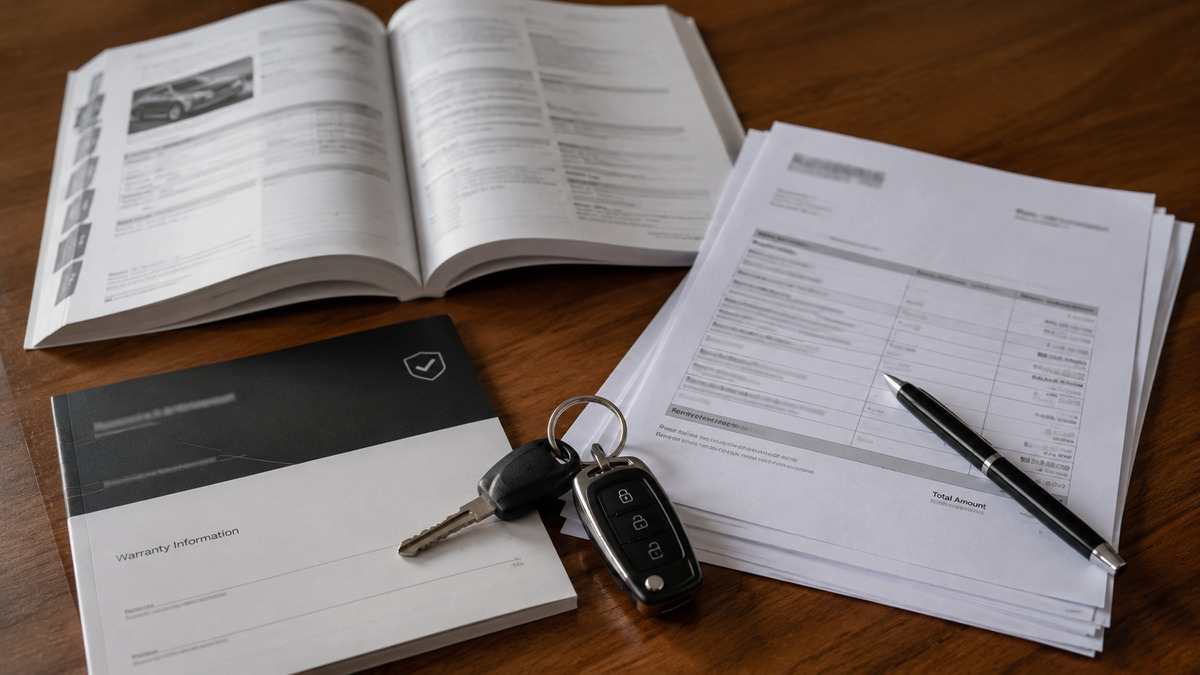
"You have to service it at the dealer or you'll void your warranty." You've heard it. It's one of the most persistent myths in car ownership — and it's been illegal for a manufacturer to enforce since 1975.
If a service advisor has ever implied that getting your oil changed anywhere but the dealership will void your factory warranty, you were misled — whether they knew it or not. A federal law called the Magnuson-Moss Warranty Act, on the books since 1975, makes it illegal for a manufacturer to void or deny your warranty simply because routine maintenance or repairs were performed by an independent shop, or because you used quality aftermarket parts.
This isn't a loophole or a gray area. It's the explicit position of the Federal Trade Commission, which has publicly warned consumers that tying warranty coverage to a specific service provider is generally prohibited. You can get your new Silverado's oil changed in Ladson instead of at the dealer in North Charleston, and your powertrain warranty is exactly as valid as it was the day you drove off the lot — as long as the work is done correctly and documented.
Here's what the law actually says, the one real exception, and how to keep records that make your warranty bulletproof.
A manufacturer cannot void your warranty because of where you had your car serviced or whose parts were used. They can only deny a specific warranty claim if they can show that the independent work or aftermarket part actually caused the failure — and the burden of proving that is on them, not you.
📋 In This Article
What the Magnuson-Moss Warranty Act Says
The Magnuson-Moss Warranty Act is a federal consumer-protection law passed in 1975 that governs written warranties on consumer products — including cars. Two of its provisions matter enormously to car owners:
1. The "tie-in sales" prohibition. A manufacturer generally cannot condition your warranty on using a specific brand of parts or a specific service provider — unless they provide those parts or that service to you free of charge, or have received a special waiver from the FTC (waivers are rare). In plain English: "your warranty is only valid if you service at the dealer" is exactly the kind of tie-in the law prohibits, unless the dealer services are free.
2. The burden of proof. If a warranted component fails, the manufacturer can't wave vaguely at your independent service history and deny the claim. To deny it, they need to show that the non-dealer work or non-OEM part actually caused the specific failure. Your independent oil changes have nothing to do with a failed infotainment screen, a bad wheel bearing, or a leaking sunroof — and denying those claims because of your service location would be improper.
This law is why every owner's manual says maintenance must be performed on schedule, but none of them say it must be performed at the dealer. The manufacturers' own lawyers know the difference.
What the FTC Says About "Dealer Only" Claims
The Federal Trade Commission — the agency that enforces Magnuson-Moss — has addressed this myth directly in its consumer guidance. Their position, paraphrased:
- It is generally illegal for a manufacturer or dealer to void your warranty or deny coverage simply because service was performed by someone else, or because aftermarket or recycled parts were used.
- An independent shop, or even you yourself in your driveway, can perform routine maintenance without affecting warranty coverage.
- The manufacturer or dealer must show the aftermarket part or independent service caused the failure before denying coverage of that repair — and even then, only the affected repair is deniable, not your whole warranty.
Search "FTC auto warranty" and you'll find the guidance yourself — it's written for consumers, not lawyers, and it's unambiguous.
The One Real Exception
Here's the honest part that a one-sided article would skip: there is a legitimate way independent service can cost you a warranty claim — bad or undocumented work.
If an independent shop (or a quick-lube, or your cousin) does the work incorrectly and that mistake causes a failure, the manufacturer can rightfully deny that claim. Real examples:
- An oil change with the wrong oil specification, and the variable valve timing system fails. The wrong oil caused it. Denial is legitimate.
- A timing belt installed one tooth off, and the engine is damaged. The installation caused it. Denial is legitimate.
- No documentation that oil changes ever happened, and the engine sludges up. The manufacturer requires proof that required maintenance was performed — no records means no proof.
Notice what all three have in common: the problem isn't who did the work. Dealer techs make these mistakes too. The problem is work done wrong or not documented. Which brings us to the two things that actually protect you.
Aftermarket Parts and Your Warranty
Quality aftermarket parts — filters, brake pads, batteries, belts — do not void your warranty. The law is explicit on this. What matters:
- The part must meet the manufacturer's specifications. A quality aftermarket oil filter that meets spec is fine. A bargain-bin filter that fails and starves the engine of oil is a caused failure — legitimately deniable.
- Fluids must meet the specification in your owner's manual. This is the big one in modern cars. Engines and transmissions have precise fluid specs (viscosity, additive standards like dexos, CVT-specific fluids). We match fluid spec to your VIN on every service — this is exactly the detail that separates a professional shop from a 10-minute lube rack.
- OEM parts are sometimes the right call anyway. For certain components — some sensors, some transmission internals — we'll recommend the OEM part because the aftermarket versions have poor track records. That's a judgment call about quality, not a warranty requirement.
The Records That Protect You
If a warranty dispute ever happens, documentation wins it. Here's what a bulletproof service file contains, and what you get from us automatically:
- An itemized invoice for every service showing the date, mileage, VIN or vehicle description, work performed, and parts/fluids used — including fluid specifications. "Oil change — $49.99" is weak documentation. "Replaced engine oil with 0W-20 full synthetic meeting GM dexos1 Gen 3, replaced oil filter (part #), 48,312 miles" is evidence.
- Services performed on the schedule in your owner's manual — the severe service schedule if you fit it, and in South Carolina heat with short commutes, most drivers do.
- Everything kept in one place. A folder in the glovebox, photos in your phone, or just tell us — we keep your full service history in our system and can print it any time you need it for a warranty claim or a resale.
This documentation habit doesn't just protect your warranty — it adds real money at trade-in or private sale.
What Dealers Can Legitimately Require
To be fair to the other side, here's what's actually required of you:
- Warranty repairs themselves happen at the dealer. If a covered component fails, the manufacturer pays the dealer to fix it — an independent shop can't process a factory warranty claim. What we often do is diagnose the problem, tell you it should be covered, and send you to the dealer with the diagnosis in hand so they can't wave you off.
- Recalls are dealer-only and always free.
- Maintenance on schedule — the law protects where you service, not whether you service. Skipped maintenance is the most common legitimate reason engine claims get denied.
- Free maintenance programs (like the complimentary maintenance some brands include for 2–3 years) are naturally dealer-performed — they're free, so use them. Magnuson-Moss's tie-in prohibition specifically allows conditions when the service is provided free.
What to Do If a Warranty Claim Is Denied
If a dealer denies a warranty claim and blames your independent service history:
- Ask for the denial in writing, with the specific cause of failure they're claiming. Vague denials often evaporate when you ask for them in writing.
- Ask them to show causation. "What specifically about the independent service caused this failure?" Under Magnuson-Moss, that's their burden.
- Bring your records. Documented on-schedule maintenance with correct fluid specs defeats most "improper maintenance" denials on the spot.
- Escalate past the service desk — the manufacturer's customer care line and regional representative can override a dealership. Mention the Magnuson-Moss Warranty Act by name; it signals you know your rights.
- If it's real money and they won't budge, options include the manufacturer's dispute-resolution program (in your warranty booklet), a complaint to the FTC at reportfraud.ftc.gov, and consulting an attorney — Magnuson-Moss allows recovery of attorney's fees in successful claims, which is why manufacturers rarely let clear-cut cases get that far.
We're not lawyers and this isn't legal advice — but we've written plenty of diagnostic reports that helped customers win warranty disputes, and step 2 alone resolves most of them.
Why Dealers Tell You This
Mostly, it's business. Dealership service departments are profit centers, and maintenance work — oil changes, brake jobs, fluid services — is the recurring revenue that funds them. A service advisor implying your warranty depends on dealer service isn't usually quoting policy; they're protecting a revenue stream. Sometimes it's just an honest employee repeating a myth they were told, too.
Either way, the choice is yours by law. Compare on the merits — we made the honest case for both sides in Independent Mechanic vs. Dealership in Ladson, SC, including the situations where the dealer genuinely is the right choice.
Frequently Asked Questions
My car is brand new and under full factory warranty. Can I really bring it to you for oil changes?
Does this apply to extended warranties and service contracts too?
What about leased cars?
Can the dealer refuse warranty work because I never bought anything from them?
Is there any modification that actually does void a warranty?
Under Warranty? You're Still Free to Choose Your Shop.
Correct fluid specs matched to your VIN, itemized invoices for your warranty file, and a 12,000-mile warranty on our own work.
Or book online: Book Appointment Online
Ladson Auto Repair Shop — 3322 Ladson Rd, Ladson, SC 29456. Serving Ladson, Summerville, Goose Creek, North Charleston, and the greater Charleston, SC metro area.
Need Help? Call Ladson Auto Repair Shop
If you have questions about your vehicle or need to schedule a repair, our experienced mechanics are here to help. We provide honest diagnostics, fair pricing, and a 12-month/12,000-mile warranty on all repairs.
📞 Call Now: 843-494-9179Serving Ladson, Summerville, North Charleston, Goose Creek, and Hanahan, SC.