F-150s are everywhere on our roads. Here's what actually goes wrong on the most common versions we see — generation by generation.
The Ford F-150 has been America's best-selling vehicle for 46 consecutive years, and it's especially dominant here. Drive I-26, Dorchester Road, or anywhere in Berkeley County and you'll see them stacked three deep in every lane. We work on more F-150s than any other single vehicle at our Ladson shop.
Because so many F-150 owners are in our area, and because trucks tend to get pushed harder than passenger cars (towing, hauling, off-road use on hunt club roads), we see the full range of F-150 problems. This guide covers what we've learned from working on them, generation by generation, with real repair cost estimates.
The most important thing to know upfront: which engine you have matters enormously. An F-150 with the 5.0L Coyote V8 has a very different problem profile from one with the 3.5L EcoBoost. We'll break those out clearly.
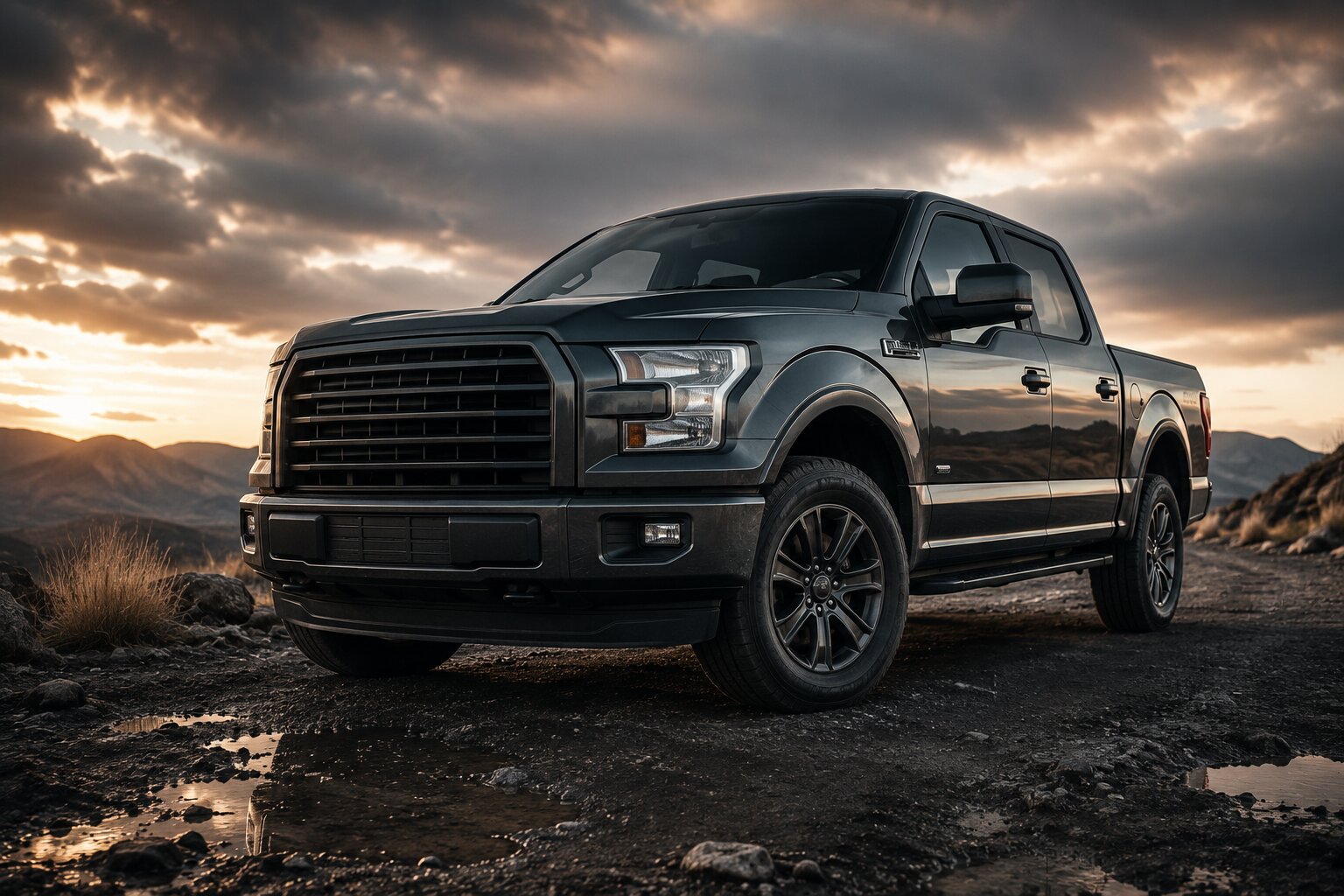
Average annual repair cost for a 2015–2020 F-150 with the 3.5L EcoBoost according to industry data — about double that of an equivalently-aged Camry. Trucks cost more to maintain. The EcoBoost adds complexity. Know what you're buying.
📋 In This Article
- Know Your Engine: Why It Changes Everything
- 3.5L EcoBoost Gen 1 (2011–2016): The Problem Engine
- 3.5L EcoBoost Gen 2 (2017–2020): Cam Phaser Problem
- 5.0L Coyote V8: The Most Reliable Choice
- 2.7L EcoBoost: The Sweet Spot
- 10-Speed Transmission Problems (2017–2018)
- Brake Master Cylinder Failures (2013–2018)
- Electrical and Aluminum Body Issues
- SC-Specific Concerns: Heat and Undercarriage
- Repair Cost Table
- FAQ
Know Your Engine: Why It Changes Everything
The F-150 offers several engine options in each generation, and they have very different reliability profiles. Before you read the rest of this, know what engine you have.
- 3.5L EcoBoost (twin-turbo V6): Most powerful, best towing, highest repair risk
- 2.7L EcoBoost (twin-turbo V6): Good power, generally more reliable than the 3.5L
- 5.0L Coyote V8: Best long-term reliability, straightforward maintenance
- 3.3L V6 (base, 2018+): Most reliable of all, modest power
The 3.5L EcoBoost is what most SC buyers chose for its capability. It's also what generates the majority of expensive engine repairs we handle.
3.5L EcoBoost Gen 1 (2011–2016): The Problem Engine
The first-generation 3.5L EcoBoost is a capable engine that's earned a difficult reputation for high-mileage maintenance demands. The specific issues cluster around:
Timing chain stretch and cam phaser wear. The 3.5L EcoBoost uses a dual-overhead-cam design with variable cam timing — cam phasers that adjust timing on the fly for efficiency. The timing chain that drives these cams, and the phasers themselves, are highly sensitive to oil quality and change intervals. On trucks with any history of extended oil changes — or that were towed hard and run hot — timing chain stretch and cam phaser wear show up between 80,000 and 130,000 miles. The symptom is a cold-start rattle that goes away after a minute of running. Left unaddressed, the chain can jump a tooth, causing serious engine damage. Timing chain service: $2,000–$3,500. Full phaser and chain replacement: $2,500–$4,000. Our engine repair services cover all EcoBoost engine repairs including timing chains, cam phasers, and carbon cleaning.
Carbon buildup on intake valves. The EcoBoost uses Gasoline Direct Injection (GDI) — fuel sprays directly into the cylinder rather than through the intake port. This means oil vapor from the PCV system deposits on the intake valves without the cleaning effect of fuel wash. By 60,000–80,000 miles, intake valves accumulate carbon deposits that restrict airflow and cause rough idle, reduced power, and increased fuel consumption. A walnut blasting service (specialized shops only) removes the carbon deposits. Cost: $600–$900 at a properly equipped shop.
Exhaust manifold cracking. A well-documented issue on 2013–2015 3.5L EcoBoost trucks. The cast iron exhaust manifolds develop cracks near the studs, causing an exhaust tick at startup that fades as the engine warms. Eventually it becomes a persistent tick and throws lean-running codes. Manifold replacement: $800–$1,400 per side.
Intercooler condensation causing misfires. The intercooler can accumulate moisture internally, particularly during humid conditions — which describes the Lowcountry nearly year-round. This causes occasional stumble or misfire, particularly on cold starts. Some owners address it with an aftermarket intercooler; others simply clear the codes. Not typically expensive to diagnose ($80–$150), but the fix varies.
3.5L EcoBoost Gen 2 (2017–2020): Cam Phaser Problem
Ford significantly updated the 3.5L EcoBoost in 2017. They added port injection alongside direct injection (eliminating the carbon buildup problem), improved the cooling system, and revised the design. Better overall — with one significant exception.
Cam phaser failure. The 2017–2020 3.5L EcoBoost has a documented cam phaser pin issue. The locking pin that holds the phaser in position when the engine is off sometimes fails to lock after shutdown. Oil drains from the phaser overnight, the pin floats, and the next cold start sounds like a maraca — a rapid, metallic rattling that lasts until oil pressure builds and the phaser locks. If the pin fully shears, timing can jump and cause piston-to-valve contact — engine destruction. Ford issued service campaign 21N03, which covers phaser replacement up to 70,000 miles. If your 2017–2020 3.5L F-150 has a cold-start rattle, this is the first thing to check. Out-of-warranty phaser replacement: $2,500–$4,000.
Plastic oil pan leaks (2015–2017 2.7L). The 2.7L EcoBoost in its first generation used an RTV-sealed plastic oil pan that develops leaks as the sealant hardens with heat cycles. A replacement oil pan with a proper gasket resolves it permanently. Cost: $400–$700.
5.0L Coyote V8: The Most Reliable Choice
The 5.0L Coyote V8 — available in the F-150 since 2011 — is by far the most straightforward engine Ford installs in this truck. It doesn't have the carbon buildup issue of GDI engines (it uses port injection), doesn't have the cam phaser problems of the EcoBoost, and its timing chain service interval is much more forgiving.
The main issue worth knowing:
Oil consumption on 2018–2020 models. The 5.0L V8 in some 2018–2020 F-150s was prone to burning 1–3 quarts of oil per 1,000 miles — significantly above normal. Ford issued TSBs addressing this; an updated PCV valve assembly fixes most cases. Cost: $150–$300.
Cam phaser rattle (older 5.4L Triton, 2004–2008). If you're looking at an older F-150 with the 5.4L Triton V8, this engine had notorious cam phaser problems. A cold-start rattle on these engines was endemic and expensive to repair ($2,500–$4,500). Avoid the 5.4L Triton for anything other than a very low price with inspection.
2.7L EcoBoost: The Sweet Spot
The 2.7L EcoBoost introduced in 2015 and significantly updated in 2018 is, in our experience, the best balance of capability and reliability in the F-150 lineup:
- 2015–2017 2.7L: Watch for the plastic oil pan leak and valve guide wear (some 2016–early 2017 units burn oil with no external leak)
- 2018+ 2.7L: Added port injection alongside GDI (eliminating carbon buildup), fixed the oil pan, and generally very strong
The 2018+ 2.7L EcoBoost F-150 is one of the better truck engines on the market.
10-Speed Transmission Problems (2017–2018)
Ford introduced the 10-speed automatic transmission in the F-150 for the 2017 model year. The first two years of this transmission had significant complaints:
- Clunking or shuddering during low-speed shifts
- Hesitation or "hunting" between gears
- Incorrect gear display on the selector
- Hard downshifts under light acceleration
Ford issued multiple software updates and in some cases replaced transmission hardware. The 2019 and later 10-speed transmissions are significantly improved after these updates and revisions. If you have a 2017–2018 F-150 with transmission behavior issues and haven't had recent software updates, that's the first step: $0 if under powertrain warranty, $80–$150 diagnostic/update otherwise.
Brake Master Cylinder Failures (2013–2018)
One of the most serious recall issues in F-150 history affected 2013–2018 models: the brake master cylinder could develop internal leaks, causing brake fluid loss and a suddenly soft or spongy pedal. This was a safety recall — Ford addressed it with master cylinder replacement. If you have a 2013–2018 F-150 and haven't verified the recall was completed, check your VIN at nhtsa.gov/recalls. A replaced master cylinder costs $600–$900 at a shop if you're past recall coverage.
Electrical and Aluminum Body Issues
Sync infotainment freezing (2015–2017). The Sync 3 system in the 13th-gen F-150 frequently froze, crashed, or lost memory. Ford issued software updates addressing most cases. If your Sync 3 is acting up, a master reset and software update through the dealer or third-party shop is the first step. For persistent electrical gremlins, our auto electrical repair services diagnose wiring, module, and sensor issues across all Ford models.
Aluminum body panel corrosion. Ford moved to an aluminum body in 2015, which eliminated traditional rust. However, aluminum develops oxidation and can galvanically corrode where it contacts steel fasteners, brackets, or body mounts — particularly in our salt-air coastal environment. Inspect aluminum panel edges and mounting points on 2015+ F-150s during your annual undercarriage inspection. This is slower-developing than steel rust but worth watching.
SC-Specific Concerns: Heat and Undercarriage
In the Ladson and Moncks Corner area, F-150 owners should be particularly aware of:
Heat effects on EcoBoost engines. The EcoBoost's turbos and intercooler system are already running near their thermal limits during heavy use. South Carolina's summer heat compounds this. If you tow regularly — boats to the boat ramp on the Cooper River, equipment trailers on US-17 — use the tow/haul mode, allow the engine to idle for 2–3 minutes before shutdown to let turbo cooling happen, and change the oil on the short end of the recommended interval.
Undercarriage inspection. Even without road salt, our tidal salt air and flooding-prone roads create meaningful undercarriage corrosion risk. We inspect brake lines, fuel lines, and frame rails on every F-150 oil change. On trucks used near the water or that have been in any flooding, annual undercarriage inspection is important.
Repair Cost Table
| Problem | Engine/Years | Typical Cost | Notes |
|---|---|---|---|
| Timing chain/cam phaser (EcoBoost) | 3.5L 2011–2016 | $2,000–$4,000 | Critical if you hear cold rattle |
| Cam phaser replacement (campaign 21N03) | 3.5L 2017–2020 | $0 under campaign / $2,500–$4,000 out of warranty | Check VIN coverage |
| Carbon cleaning (walnut blast) | 3.5L GDI (pre-2017) | $600–$900 | Every 60–80k miles |
| Exhaust manifold replacement | 3.5L 2013–2015 | $800–$1,400/side | Common tick complaint |
| Plastic oil pan replacement | 2.7L 2015–2017 | $400–$700 | Permanent fix |
| 10-speed transmission service/update | 2017–2018 | $80–$150 | Software often fixes it |
| Brake master cylinder | 2013–2018 | $600–$900 (if past recall) | Safety-critical; check VIN |
| Oil consumption fix (5.0L V8) | 2018–2020 | $150–$300 | PCV assembly update |
| Sync infotainment update | 2015–2017 | $80–$150 | Usually software |
| Undercarriage inspection | All | Included in oil change | Annual in coastal SC |
Frequently Asked Questions
My F-150 rattles at startup but goes quiet after 30 seconds. Should I be worried?
Is the EcoBoost worth it vs. the 5.0L?
What's the most reliable F-150 year to buy used?
Schedule an F-150 Service or Inspection
📞 Call 843-494-9179 | Book Online
Ladson Auto Repair Shop — 3322 Ladson Rd, Ladson, SC 29456.
Need Help? Call Ladson Auto Repair Shop
If you have questions about your vehicle or need to schedule a repair, our experienced mechanics are here to help. We provide honest diagnostics, fair pricing, and a 12-month/12,000-mile warranty on all repairs.
📞 Call Now: 843-494-9179Serving Ladson, Summerville, North Charleston, Goose Creek, and Hanahan, SC.